Guide to Personal Protective Equipment (PPE): Step-by-Step Donning and Doffing Procedure
In healthcare settings, the meticulous execution of infection control protocols is paramount to breaking the chain of transmission. Personal Protective Equipment (PPE) serves as a critical barrier against nosocomial pathogens. However, the efficacy of PPE relies entirely on the correct sequence of putting it on (donning) and taking it off (doffing).
Below is the clinically validated, step-by-step guideline compliant with global health standards (CDC and WHO) for healthcare professionals.
Part 1: The Donning Sequence (Putting on PPE)
The donning process must be performed in a designated clean area before entering the patient care zone or isolation room. Ensure all equipment is appropriately sized and free of structural defects.
1. Perform Hand Hygiene
- Protocol: Decontaminate hands using an alcohol-based hand rub (60-70% ethyl/isopropyl alcohol) or wash thoroughly with antimicrobial soap and water for at least 20 seconds. Ensure hands are completely dry before proceeding.
2. Don the Isolation Gown
- Protocol: Select a gown that fully covers the torso from neck to knees and arms to end of wrists. Fasten the gown securely at the neck and waist. Ensure the back of the gown overlaps completely to prevent exposed undergarments.
3. Don the Mask or Respirator
- Protocol: Place the mask or respirator (N95, FFP2, or FFP3) over the nose and mouth. Fit the flexible nosepiece over the bridge of the nose using both hands. Secure the ties or elastic bands tightly at the middle of the head and neck.
- Validation: For respirators, perform a mandatory user seal check (positive and negative pressure check) to ensure no peripheral air leaks exist.
4. Don Goggles or Face Shield
- Protocol: Position the protective eyewear or face shield over the eyes and face. Adjust the headband to secure a snug but comfortable fit. Ensure the straps do not displace the tight seal of the respirator.
5. Don Pairs of Gloves
- Protocol: Pull the medical gloves on over your hands. Crucially, extend the cuffs of the gloves so that they completely overlap and cover the knit cuffs of the isolation gown. Ensure no skin is exposed at the wrist interface.
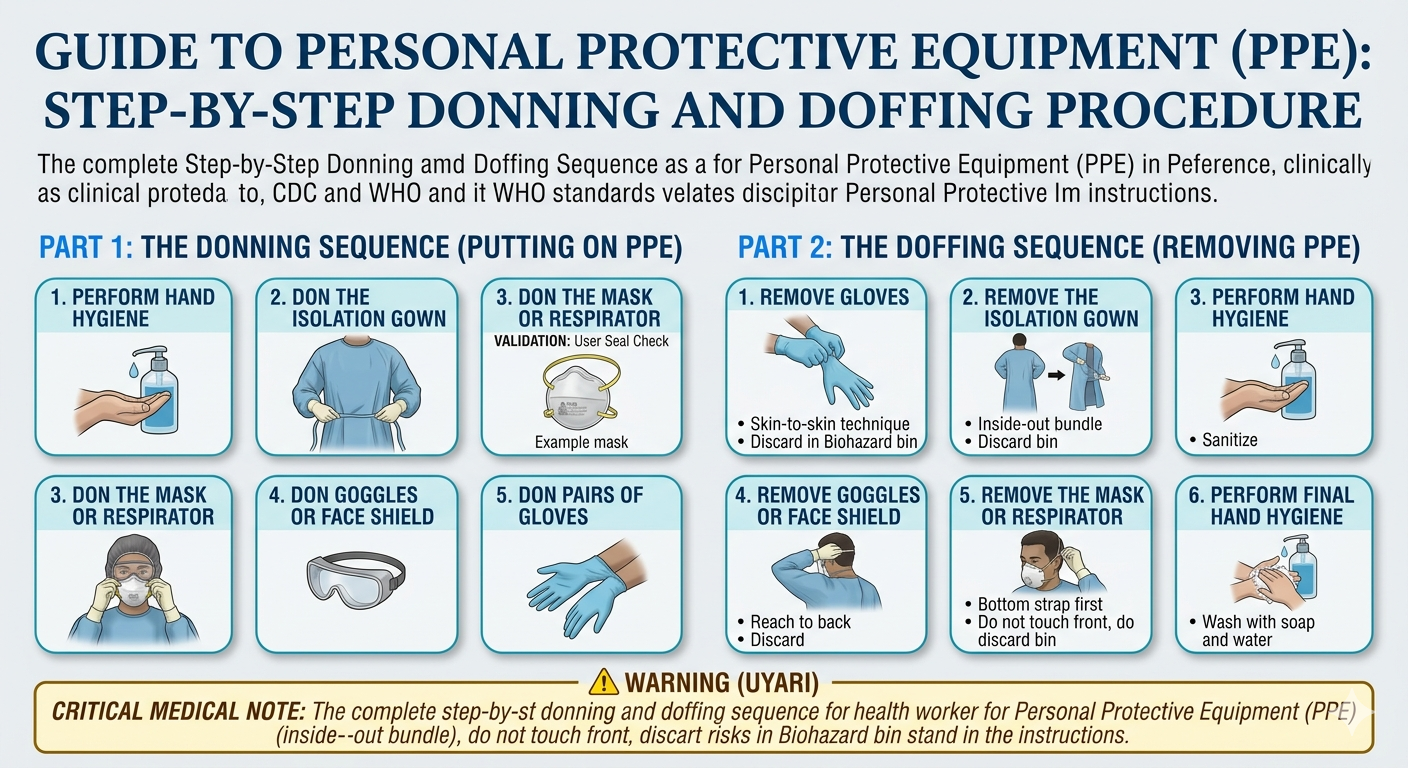
Part 2: The Doffing Sequence (Removing PPE)
The doffing process poses the highest risk of self-contamination for healthcare workers. Except for the respirator, all PPE should be removed before exiting the patient room or inside a designated anteroom.
1. Remove Gloves
- Protocol: The outside of the gloves is highly contaminated. Using the glove-to-glove and skin-to-skin technique, peel off the first glove inside out without touching the exterior. Hold the removed glove in the remaining gloved hand. Slide a finger under the cuff of the remaining glove and peel it off over the first glove, creating a clean packet. Discard immediately into a biohazard waste container.
2. Remove the Isolation Gown
- Protocol: The front and sleeves of the gown are contaminated. Unfasten the ties or break the closures gently at the neck and waist, ensuring the gown does not snap forward violently. Pull the gown away from the neck and shoulders, touching only the inside of the gown. Turn the gown inside out, roll it into a bundle, and discard it into the biohazard bin.
3. Perform Hand Hygiene
- Protocol: Immediately sanitize your hands using an alcohol-based hand rub before touching your face or moving to the next step.
4. Remove Goggles or Face Shield
- Protocol: The outside of the eyewear is contaminated. Reach to the back of your head and lift the headband or earpieces forward without touching the front surface of the visor or lenses. Discard or place in a designated container for reprocessing.
5. Remove the Mask or Respirator
- Protocol: Do not touch the front of the mask. Unfasten or lift the bottom strap over your head first, followed by the top strap. Pull the respirator forward and away from your face, and discard it into the biohazard waste container.
6. Perform Final Hand Hygiene
- Protocol: Wash hands thoroughly with soap and water or use an alcohol-based hand rub immediately after completing the doffing sequence to eliminate any trace contaminants.

⚠️ WARNING (UYARI)
CRITICAL MEDICAL NOTE: The doffing sequence is a high-risk procedure where improper technique directly correlates with accidental self-inoculation of infectious agents. If your hands become visibly contaminated at any point during the removal of PPE, you must stop immediately, perform hand hygiene using an alcohol-based hand rub containing at least 60-70% alcohol, and then proceed with the remaining steps.
All components of PPE must be discarded into approved biohazard waste receptacles (Biohazard Waste Bag / Medical Waste Bin) immediately upon removal. Deviations from established institutional infection control committee guidelines compromise personal biosecurity and increase the incidence of healthcare-associated infections (HAIs).